
Strong Brew • Fitness Lying Down • La Crosse, WI
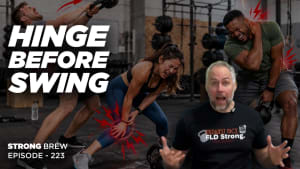
The Problem With Kettlebell Swings (And What to Do Instead)
Kettlebell swings are beloved. They’re flashy. They’re “simple.” They make people feel athletic. But here’s the uncomfortable truth: simple doesn’t mean safe—and popular doesn’t mean appropriate.
A bold statement to start the kettlebell civil war:
You don’t have to do kettlebell swings.
And if that makes someone mad… good. That’s usually where better coaching begins.
Why kettlebell swings get treated like a “must-do”
Some gyms assign kettlebell swings to everyone—no matter who you are, where you are, or how you move—because they’re emotionally attached to the exercise. It feels powerful. It spikes the heart rate. It looks athletic. And yes… all of that can be true.
But here’s the real coaching question: What’s the risk vs. reward for the person in front of you? Because kettlebell swings are not a “beginner” movement, and they’re not automatically the best option just because they’re trendy.
Trigger warning: If your gym “lives and dies” by kettlebell swings, you might be using tradition as a substitute for coaching.
The hip hinge isn’t optional
The swing is built on a hip hinge. So if your basic hinge pattern—deadlifts, hip hinges, fundamental loading strategies— isn’t solid, then swings are basically asking your body to solve a high-speed problem with low-speed skill.
Coaching truth: A kettlebell swing doesn’t magically teach the hinge. It exposes whether you already own it.
Most people don’t get hurt on the way up
Here’s the part that gets ignored: deceleration. When the bell is floating out in front of you, you’re dealing with a long lever arm. Then gravity takes over. If you can’t maintain posture stability and core integrity, your body folds, and the low back ends up absorbing forces it shouldn’t.
Most swing injuries happen on the way down.
Not during the “power” part. During the “control” part.
So what should you do instead?
At Fitness Lying Down, we often prescribe a swing-adjacent solution that gives people the “kettlebell fix” without the same demand on deceleration: kettlebell high pulls & catches.
- Same hinge setup
- Powerful hip extension
- Bell stays close to the body (more control)
- Strong catch at the top
- Guided return to the start position
You still get: power, cardio, posterior chain training, and hinge practice—without fighting a violent lever arm on the return.
The bottom line
Kettlebell swings aren’t “bad.” But they’re not automatically “right,” either. If you’re constantly aggravated by swings, if your low back is doing the work, or if your hinge competency isn’t there yet, train another way.
The goal isn’t to prove you can swing a kettlebell. The goal is to build strength, stability, and confidence that lasts.
Watch the episode
Prefer YouTube? Click here to watch.
Want coaching that prioritizes results and your back?
If you’re tired of exercises being handed out like copy/paste programming, come train with a team that treats movement quality like it matters—because it does.
Reply “SWING” and we’ll help you find the right hinge-based training for your body (swings optional 😉).